
Building Impact Protection
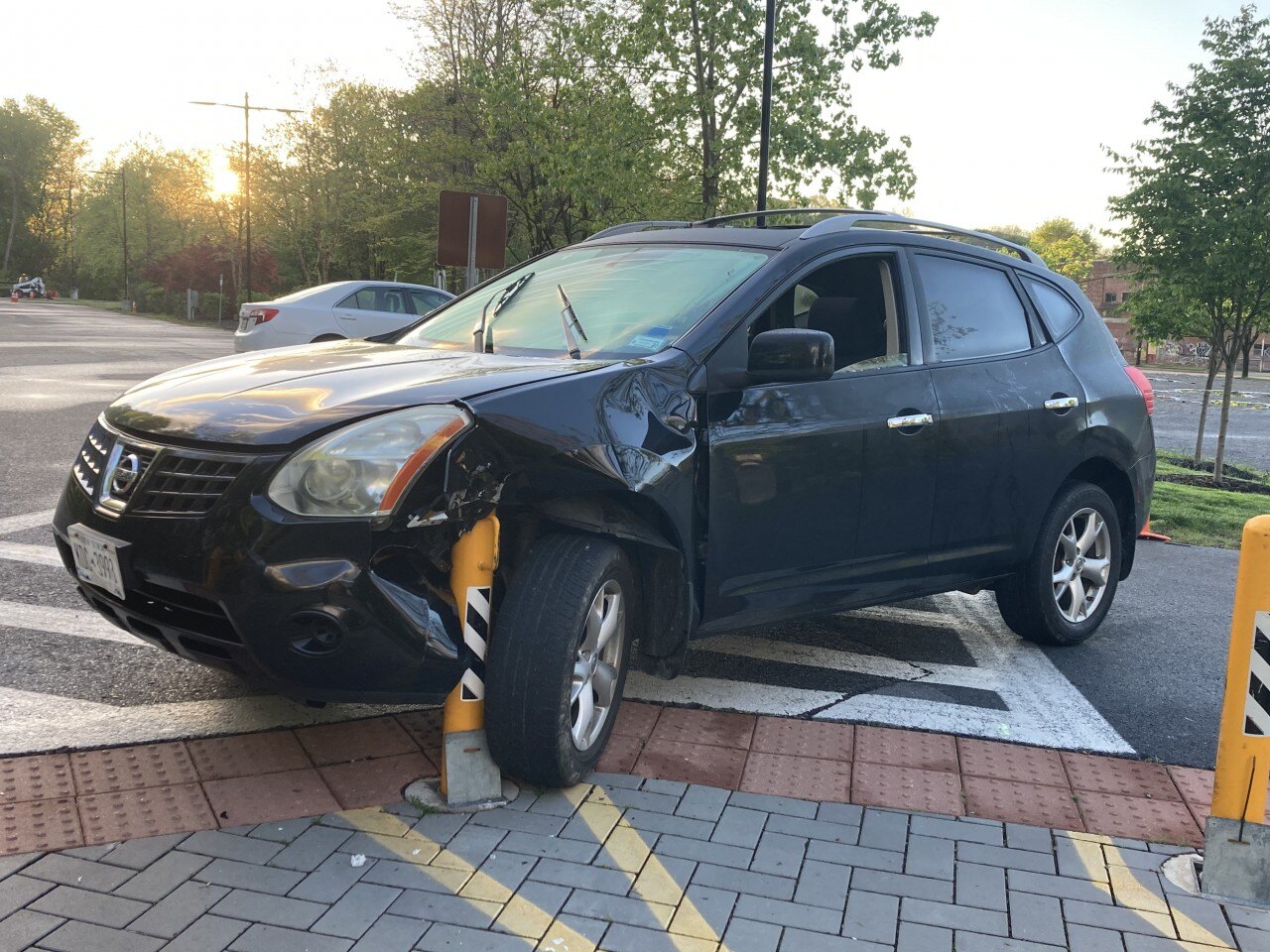
Every day, storefronts across the country are struck by vehicles—sometimes by accident, sometimes not. According to the Storefront Safety Council, vehicles crash into commercial buildings more than 100 times per day in the United States, resulting in as many as 16,000 injuries and 2,600 deaths annually.
A car rolling out of a parking space, a delivery truck misjudging a turn, or a deliberate ram-raid can all result in the same outcome: property damage, injuries, and costly downtime. For business owners and facility managers, the question is not whether to protect a storefront. It’s how.
This guide walks through how to assess your risk, understand crash ratings, choose the right bollard type, and plan installation—so you can make a confident, informed decision before you buy.
In this guide:
- Why Storefronts Are Vulnerable to Vehicle Impact
- How to Assess Your Storefront's Risk Level
- Understanding Crash Ratings: What ASTM F3016 Really Means
- Fixed vs. Removable vs. Collapsible: Choosing the Right Type of Storefront Protection
- Installation Considerations for Existing Storefronts
- Bollard Placement: Where to Put Them for Maximum Storefront Protection
- Cost Factors: What Drives Storefront Bollard Pricing
- Real-World Examples
- FAQs
Why Storefronts Are Vulnerable to Vehicle Impact
Storefronts sit at a unique intersection of foot traffic, parking, and vehicle movement—which makes them more exposed to vehicle impact than most other parts of a commercial property. Understanding why these incidents happen is the first step toward preventing them.
Common Causes of Storefront Vehicle Crashes
Most vehicle-into-building incidents are not intentional. The leading causes include:
- Pedal Error: A driver mistaking the accelerator for the brake, most often in parking lots directly in front of entrances.
- Parking Lot Roll-Aways: Vehicles left in neutral or with a failed parking brake.
- Misjudged Turns: Particularly from delivery trucks or larger vehicles near loading zones.
- Medical Events: Sudden health episodes behind the wheel with no opportunity to stop.
- Distracted Driving: Phones, passengers, or in-vehicle systems pulling attention at the wrong moment.
- Intentional Impact: Ram-raiding or forced entry targeting cash registers, ATMs, or high-value inventory.
- Poor Parking Lot Design: Long, unobstructed drive lanes or direct run-ups toward the storefront allow vehicles to build speed before impact, increasing the severity of damage when a crash occurs.
The common thread across all of these scenarios: the vehicle reaches the building because nothing stopped it.
Why Glass Storefronts Are Especially at Risk
Glass storefronts offer little structural resistance. A vehicle traveling at even low speed can breach a window or door with enough force to reach deep into a building. Unlike a concrete or masonry wall, glass provides no meaningful barrier between a vehicle and the people inside.
Retail properties face additional risks, including high-volume parking lots where vehicles operate in close proximity to pedestrians, wide glass facades that maximize exposure, and high foot traffic concentrated directly in front of the building. A single incident can result in tens of thousands of dollars in structural damage, inventory loss, medical liability, and business interruption.
How to Assess Your Storefront's Risk Level
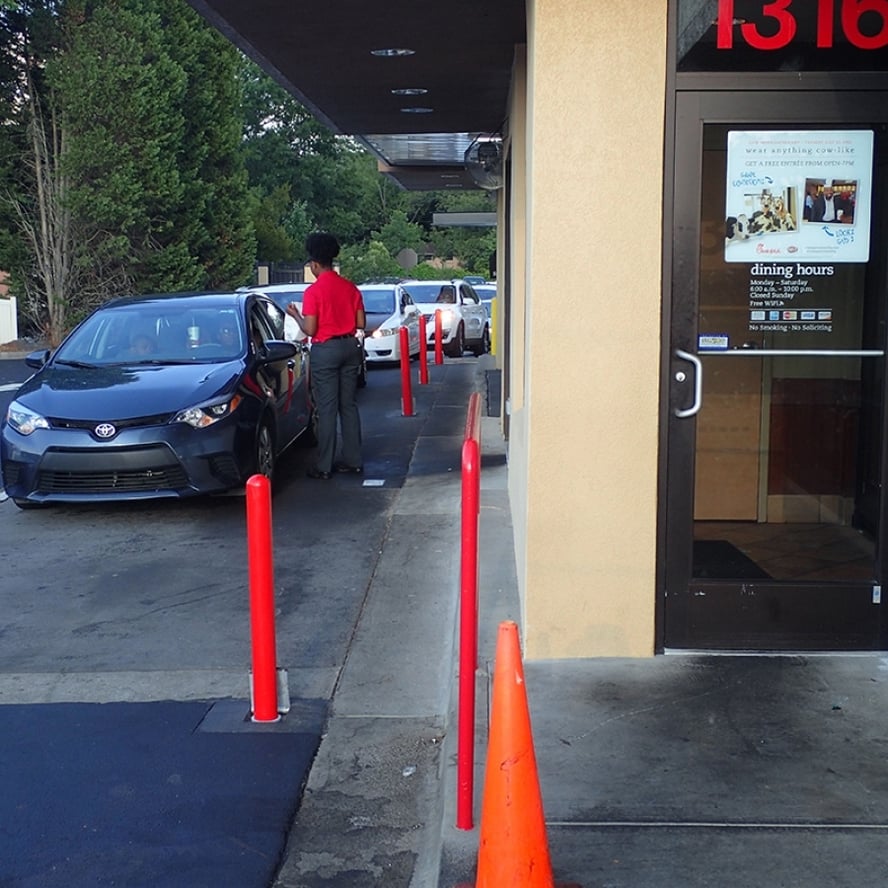
Not every storefront needs the same level of protection. Before choosing a bollard, it helps to walk through a quick risk assessment of your specific property. The factors below will help you determine whether standard security bollards are sufficient or whether a crash-rated system makes more sense.
Key Risk Factors to Evaluate
Work through each of these for your property:
- Proximity to Parking: How close are the nearest parking spaces or drive aisles to your entrance or windows? The shorter the distance, the less time a vehicle has to stop before reaching your building.
- Traffic Patterns: Is the property near a busy intersection, a drive-through, or a high-speed roadway? Higher surrounding traffic speeds increase the potential impact force.
- Foot Traffic and Glass Exposure: How much of your storefront is glass, and how many customers pass through daily? More glass and more people means greater consequence if an incident occurs.
- Prior Incidents: Has the property or a nearby location experienced a vehicle strike before? Repeat incidents at similar properties are a strong signal that protection is warranted.
- Insurance and Compliance Requirements: Does your insurer, landlord, or local code require specific protection standards? Some policies and lease agreements include perimeter security provisions worth reviewing.
- Parking Lot Layout and Run-Up Distance: Does your site have long, straight drive lanes that point directly at the storefront? The more distance a vehicle has to accelerate, the higher the potential impact speed and damage.
What Your Assessment Points To
A higher score across these factors generally points toward a crash-rated bollard system rather than a standard security bollard. If your storefront sits directly across from parking spaces, has significant glass exposure, and handles high daily foot traffic, crash-rated protection is the right starting point.
If you are unsure where your property falls, TrafficGuard's team can walk through a site-specific assessment with you before you commit to a solution.
Understanding Crash Ratings: What ASTM F3016 Really Means
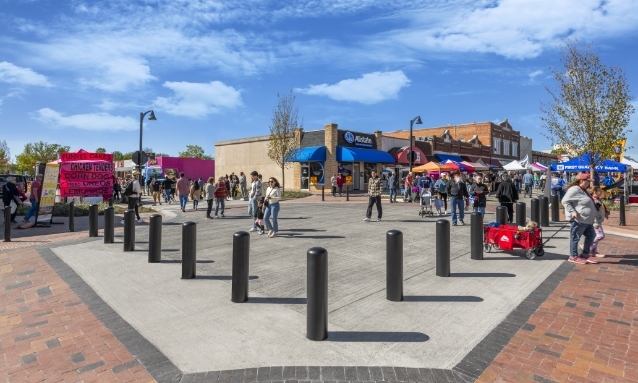
Crash-rated bollards are tested and certified under ASTM F3016, the industry standard for vehicle-barrier impact testing. Understanding what the rating actually tells you makes it much easier to match the right product to your property's risk level.
How ASTM F3016 Testing Works
ASTM F3016 tests a bollard's ability to stop a 5,000 lb. vehicle at a specified speed without allowing the vehicle to penetrate past the barrier line. The rating reflects the speed at which that test was passed.
The test is conducted by an independent, accredited laboratory. The bollard either passes or it does not. There is no partial credit, and no self-certification.
Choosing the Right Rating for Your Property
| Rating | Vehicle Weight | Best For |
| 10 MPH | 5,000 lb. | Retail storefronts, standard commercial entrances |
| 20 MPH | 5,000 lb. | High-traffic commercial entrances, shopping centers |
| 30 MPH | 5,000 lb. | High-security facilities, corporate headquarters |
As a general rule, choose 10 MPH for standard storefront protection, 20 MPH for higher-traffic or higher-visibility entrances, and 30 MPH for facilities with elevated security requirements.
Fixed vs. Removable vs. Collapsible: Choosing the Right Type of Storefront Protection
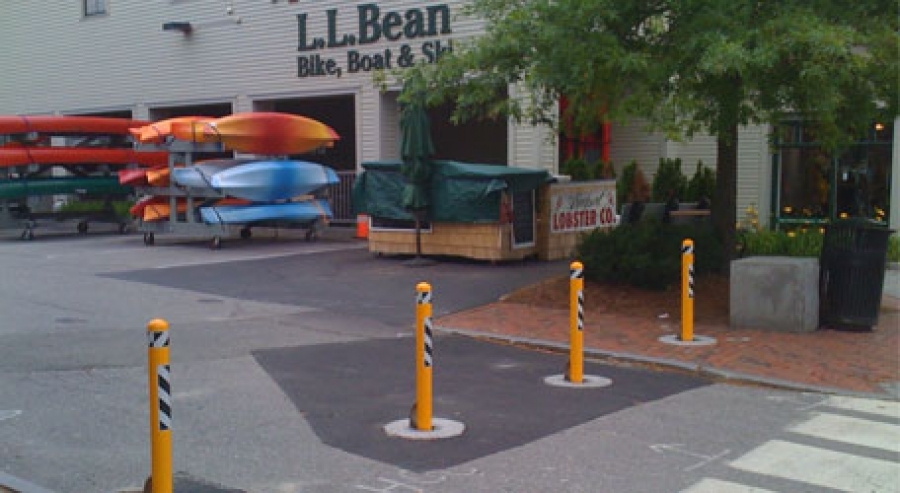
Crash rating tells you how much protection you get. Bollard type tells you how that protection fits into your daily operations. The right type depends on whether vehicles ever need access to the protected area and how often that access needs to happen.
Fixed Bollards
Best for: Permanent protection
Fixed bollards are installed directly into the ground and stay in place permanently. They require no ongoing management and provide continuous protection 24 hours a day without any action required from your staff. Once they are in, they are working.
Fixed bollards are the right call for areas that never need vehicle access, like the front face of a storefront, pedestrian walkways, and areas directly in front of building entrances. They are available in embedded and surface-mounted styles depending on your concrete and site conditions.
Removable Bollards
Best for: Areas that occasionally need vehicle access
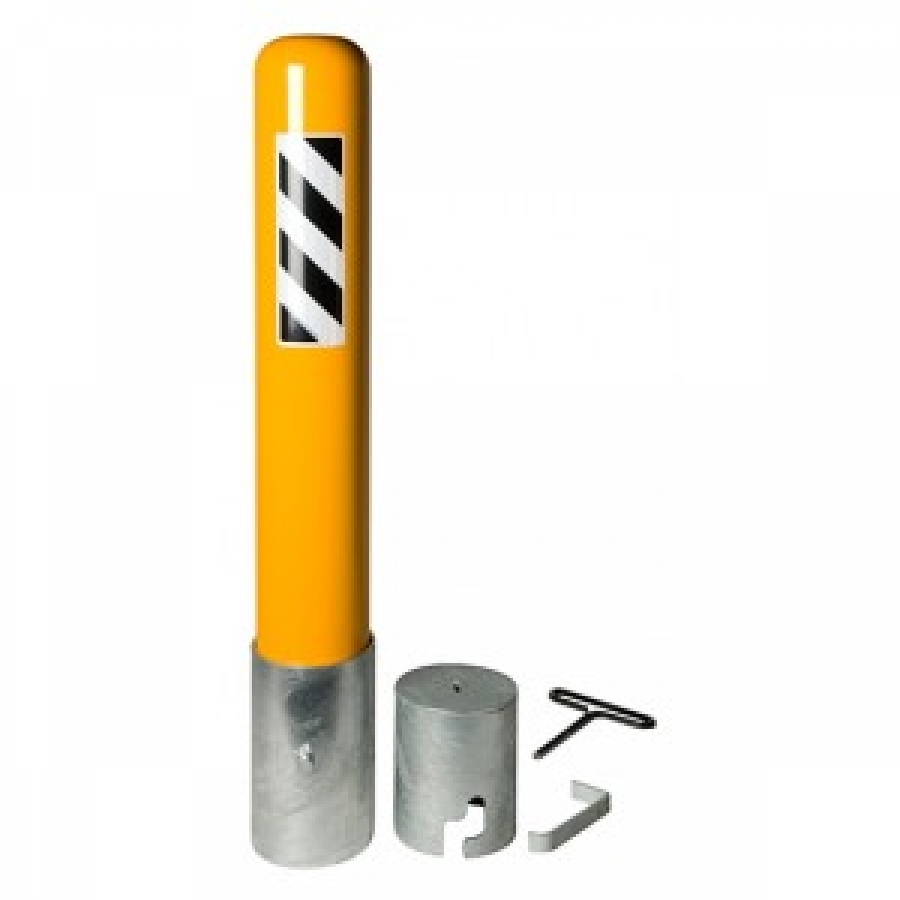
Removable bollards install into a ground sleeve and can be lifted out when vehicle access is needed, then put back into place to restore protection. This makes them ideal for loading dock areas, side entrances used for deliveries, or locations where emergency vehicles may need occasional access.
TrafficGuard offers both non-locking and locking removable bollards with several patented locking systems. Locking removable bollards are the better choice for any area where unauthorized removal is a concern.
Collapsible Bollards
Best for: Flexible, high-frequency access points
Collapsible bollards fold down to ground level when access is needed and return to their upright position to restore protection. They are a practical fit for entrances that open regularly, such as a service drive or a gate that operates on a daily schedule.
Unlike removable bollards, collapsible models do not need to be stored when not in use. They fold flat, which is a meaningful advantage for high-frequency access points where staff would otherwise be managing bollard storage.
Crash-Rated Options Across All Types
Crash-rated protection is not limited to fixed bollards. TrafficGuard's crash-rated systems are available in both fixed and removable configurations, so you do not have to sacrifice access flexibility to get ASTM F3016-certified impact protection.
| Bollard Type | Best Use Case | Vehicle Access | Crash Rating Available |
| Fixed | Permanent storefront protection | No | Yes |
| Removable | Delivery areas, side entrances | Yes (with key) | Yes |
| Collapsible | Frequent access points | Yes (fold down) | No |
If your storefront needs constant, unmanned protection, fixed is usually the right call. If authorized vehicles need periodic access through the same space, removable or collapsible models let you maintain protection without permanently blocking access. Many properties use a combination of both.
Installation Considerations for Existing Storefronts
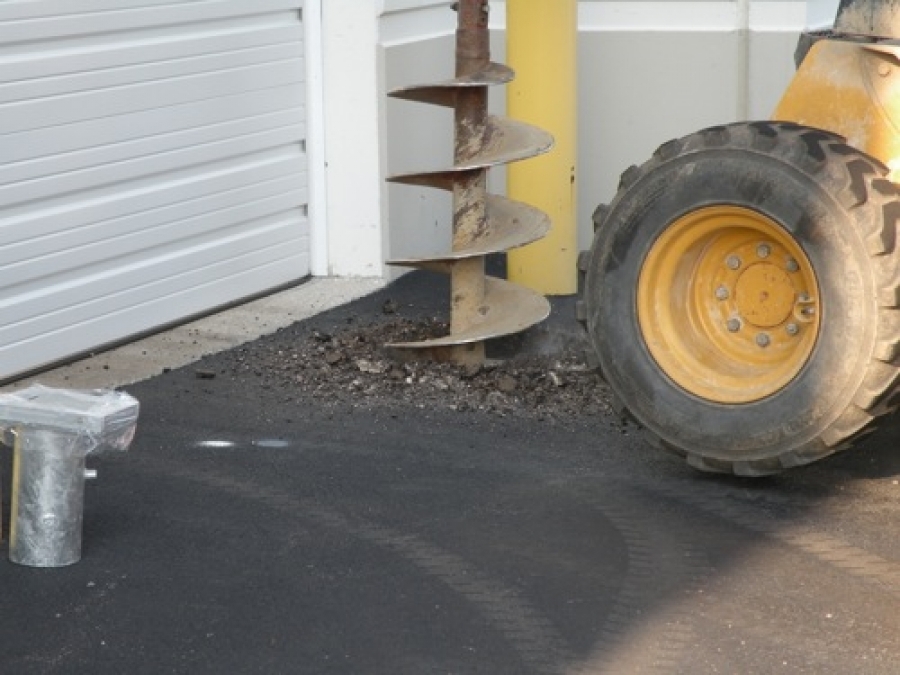
Retrofitting bollards onto an existing storefront comes with constraints that new construction does not have, including underground utilities, limited excavation space, and the need to keep the business open during installation. Planning around these factors upfront prevents surprises and keeps the project on schedule.
Standoff Distance
Bollards should be positioned far enough from your glass and entrances to safely absorb impact force before it reaches the structure. The exact standoff distance depends on the crash rating and the expected vehicle speed at your site. Higher-speed ratings generally require greater standoff distance. A bollard specialist can calculate the right distance for your specific layout.
Core-In Installation: Built for Retrofits
For existing storefronts where excavation depth is limited or where working close to an existing structure is a concern, TrafficGuard's patented Core-In system is specifically designed for this scenario. The Core-In method delivers crash-rated protection with minimal excavation by taking into account the strength of the pre-existing concrete slab—making it a strong fit for retrofit applications where standard embedded installation is not practical.
The Core-In system is available in 10 MPH and 20 MPH configurations, in both fixed and removable options.
Utility Checks & Site Prep
Before any excavation-based installation, underground utility locations must be confirmed. This applies to both standard embedded bollards and Core-In installations. Your contractor should call 811 (the national "call before you dig" line) before any work begins.
Bollard Placement: Where to Put Them for Maximum Storefront Protection
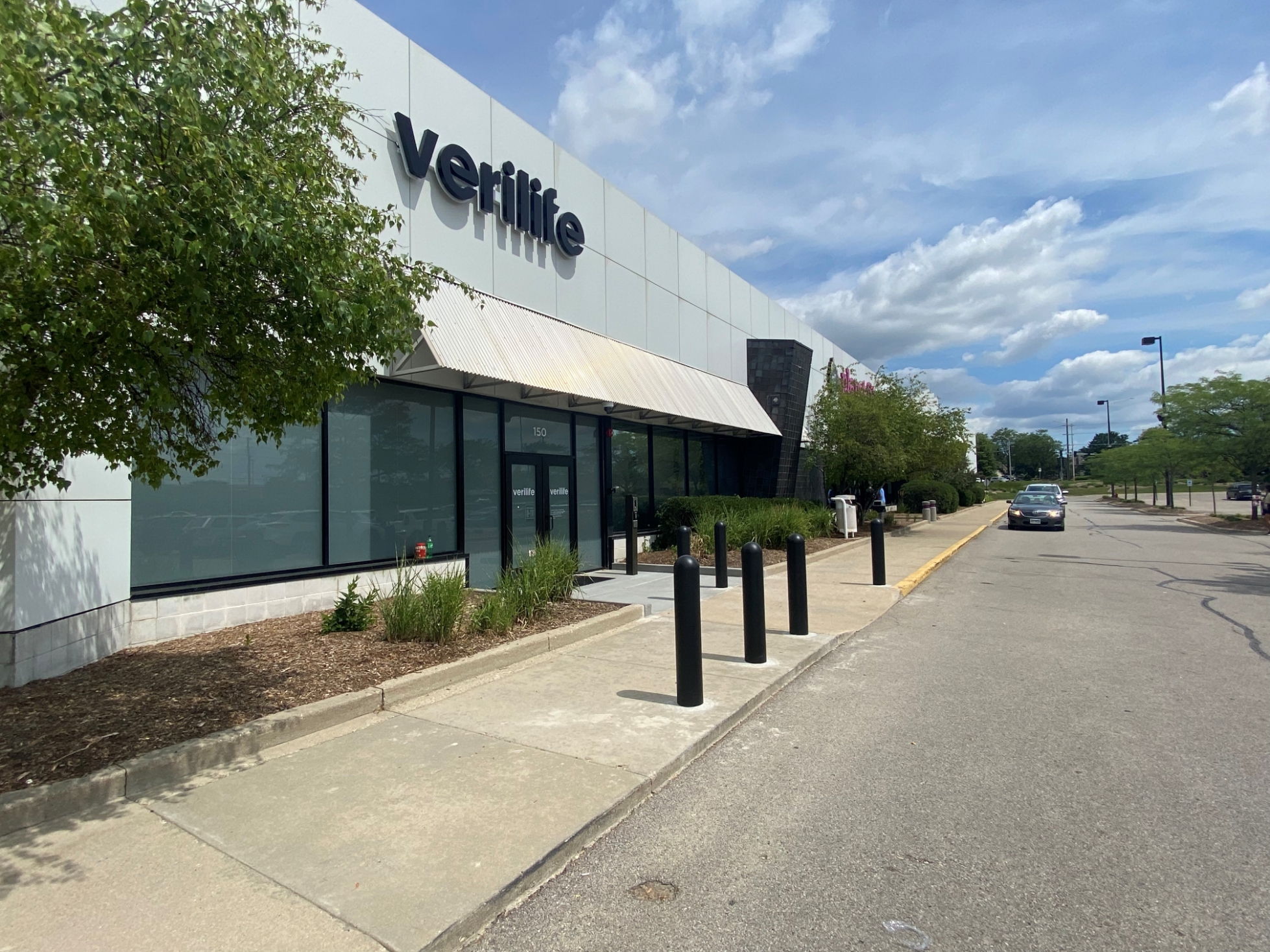
Placement matters as much as the bollard itself. Even the right product in the wrong location leaves gaps in your protection. Here is how to think about the most common placement zones for storefront properties.
In Front of Entrance Doors & Glass Window Lines
The highest-priority placement for any retail property is directly in front of the building entrance and along the storefront glass line. This is where a runaway vehicle would cause the most structural damage and where pedestrian exposure is highest.
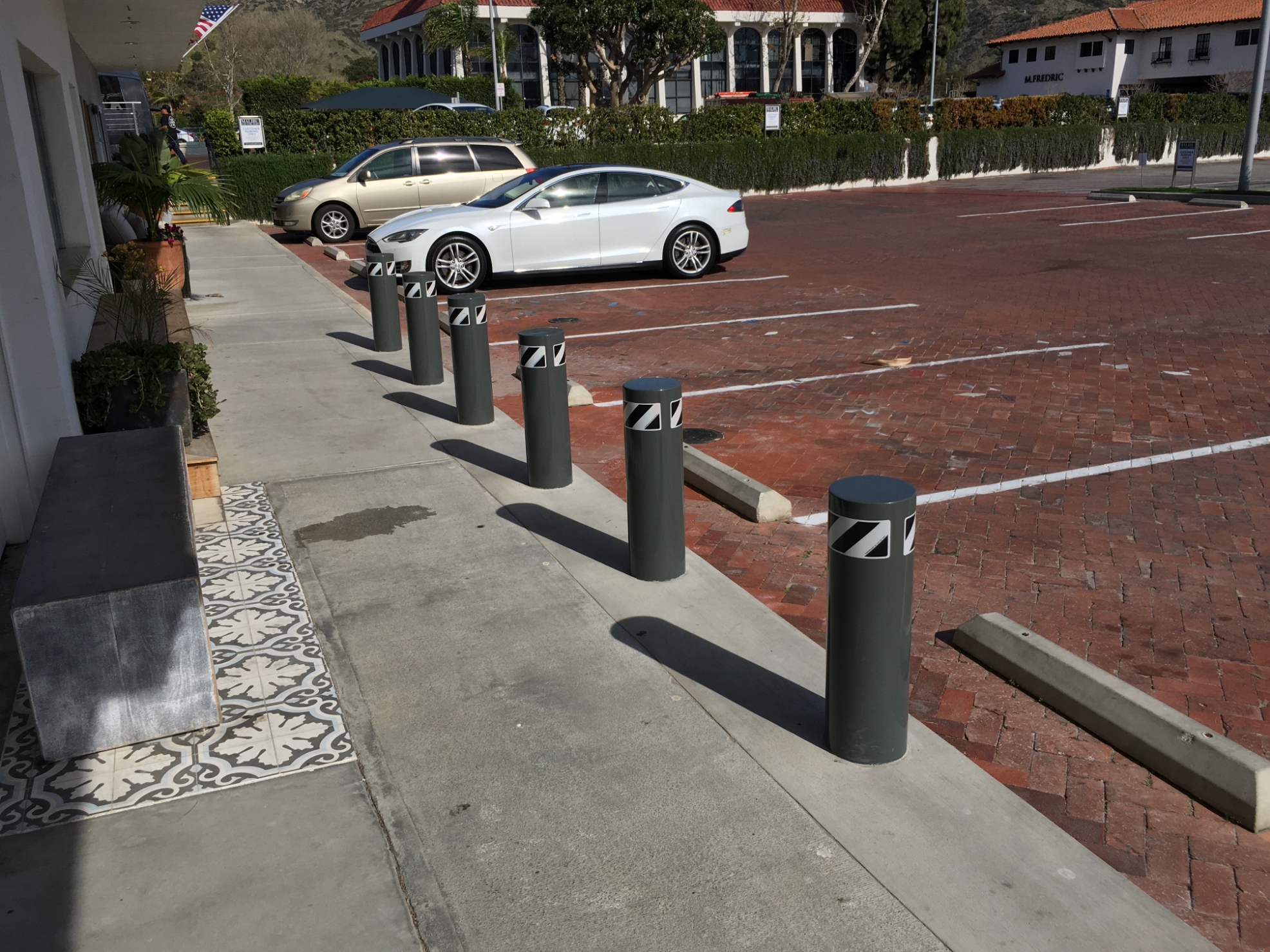
Bollards in this zone should be spaced close enough to prevent a vehicle from passing between them. For pedestrian and vehicle mixed zones, spacing of no more than 4 to 5 feet is a common starting point, though exact spacing should follow project-specific engineering guidance.
Along Drive Lanes That Run Parallel to the Building
Drive aisles that run parallel and close to the building face create a scenario where a vehicle turning or drifting can strike the building at an angle, while long, unobstructed lanes can allow vehicles to build speed before impact. Bollards along these lanes redirect vehicle paths and create a clear physical boundary between the drive lane and the pedestrian zone.
At Building Corners
Building corners are a frequent impact point because vehicles cutting across parking areas often clip them. Bollards at corners protect the structural edge of the building and are especially important for end-cap retail units and corner storefronts.
At Loading Dock & Delivery Zone Perimeters
Loading docks and service entrances are often overlooked in storefront protection planning, but they are access points that can be exploited—both accidentally and intentionally. Removable or collapsible bollards at these locations allow your team to open access for deliveries and restore protection when the area is not in active use.
Key takeaway: Think of bollard placement as creating zones of protection rather than a single line of defense. Your entrance, your glass line, your building corners, and your access points each need to be addressed as part of a complete plan. For a deeper look at how different bollard types compare across placement scenarios, the Bollard Comparison Guide is a useful next step.
Cost Factors: What Drives Storefront Bollard Pricing
Bollard pricing varies based on three main factors: crash rating, material, and installation complexity. Understanding what drives cost helps you budget accurately and avoid over- or under-investing for your specific situation.
Crash Rating
Fixed, non-crash-rated security bollards are generally the most affordable option. Crash-rated systems cost more due to the engineering, testing, and materials required to meet ASTM F3016 impact standards. Within the crash-rated category, 30 MPH bollards carry a higher price point than 10 or 20 MPH models because the impact forces involved require heavier-gauge steel and deeper anchoring.
Material & Finish
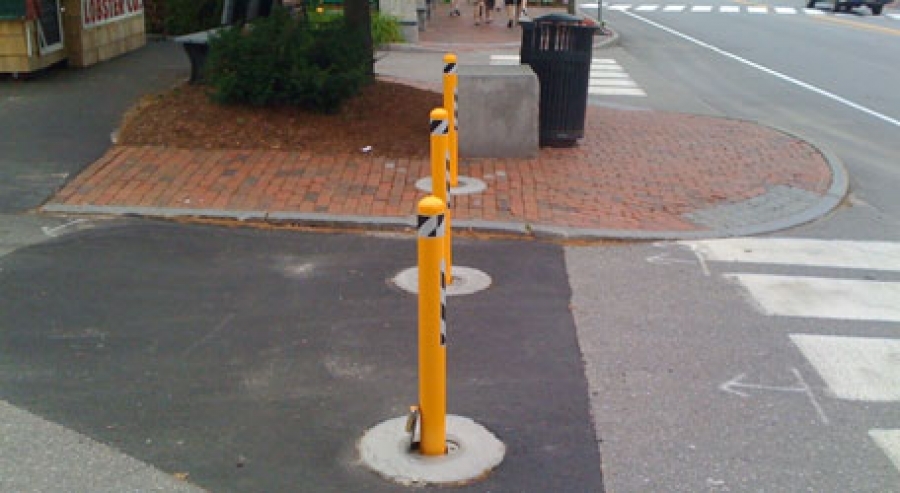
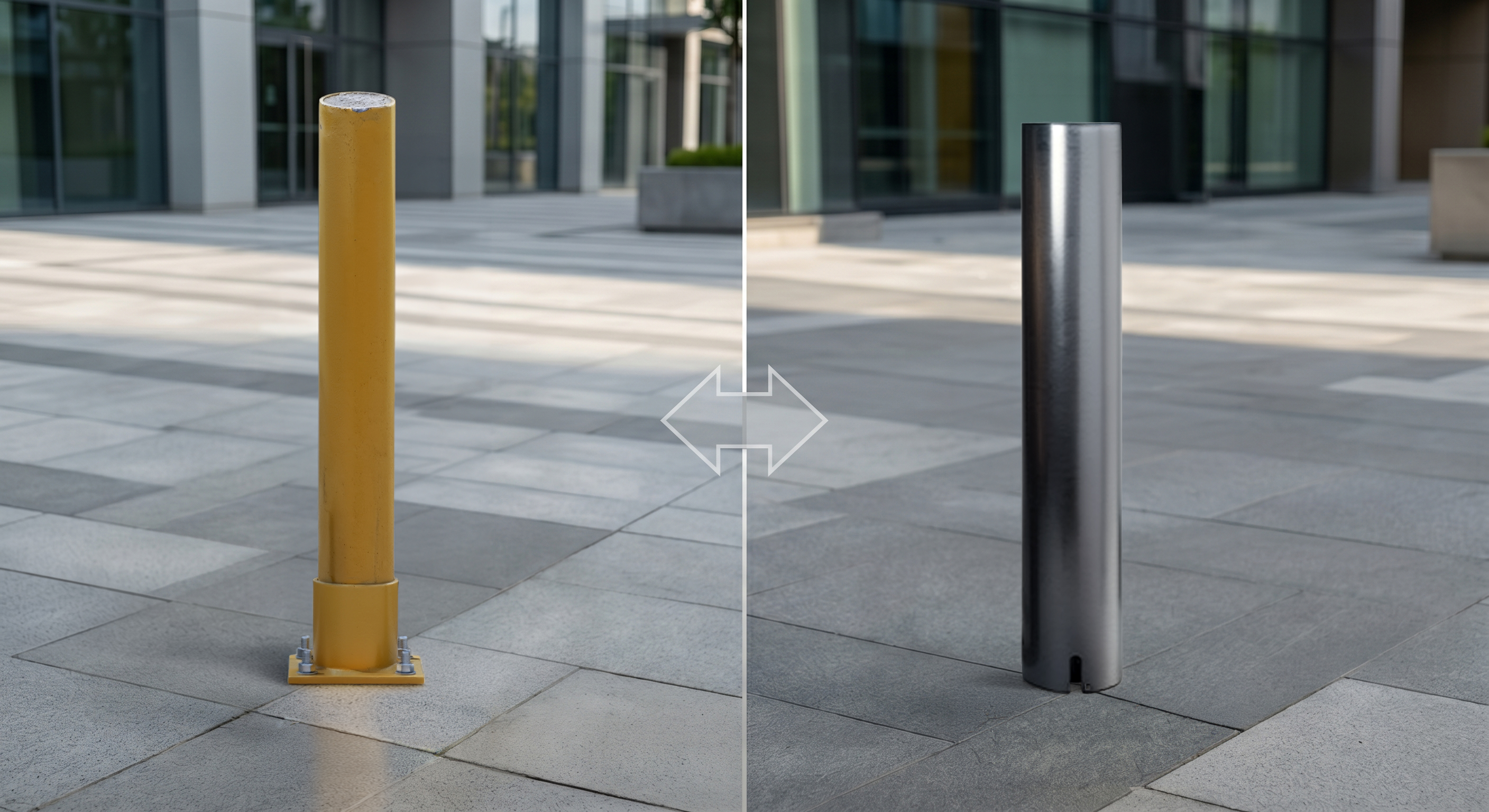
- Powder-Coated Carbon Steel: The most cost-effective option for most commercial applications; durable and available in high-visibility yellow and other finishes.
- Stainless Steel: Carries a premium over carbon steel; excellent corrosion resistance and a clean professional appearance suited to upscale or high-visibility retail environments.
Installation Complexity
Installation costs are additional and depend on the method and site conditions. Surface-mounted bollards attach to existing concrete and are the most straightforward to install. Embedded bollards require excavation and concrete work. The Core-In system sits between the two. It uses the existing slab to reduce excavation depth, which typically lowers installation cost compared to standard embedded methods on retrofit projects.
The best way to get an accurate number for your property is to request a quote. Pricing varies enough by configuration and site that a general range is rarely useful without knowing your specific requirements.
For a broader look at specs and application scenarios, the storefront bollards page covers common configurations for commercial and retail properties.
Real-World Examples
Seeing how other businesses have approached storefront protection makes it easier to understand how crash rating, bollard type, and installation method come together in practice.
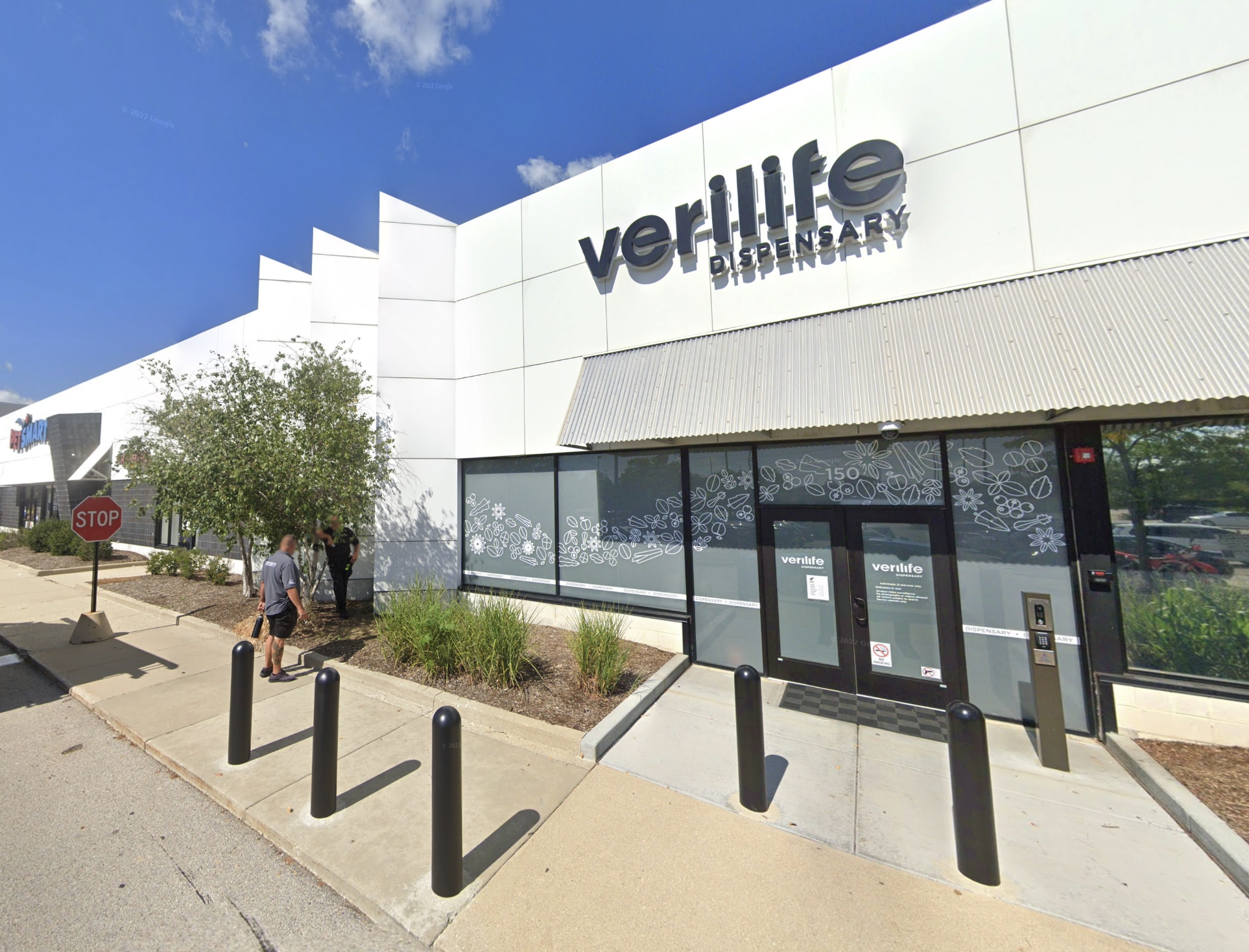
Verilife: 20 MPH Core-In Protection for a Retail Storefront
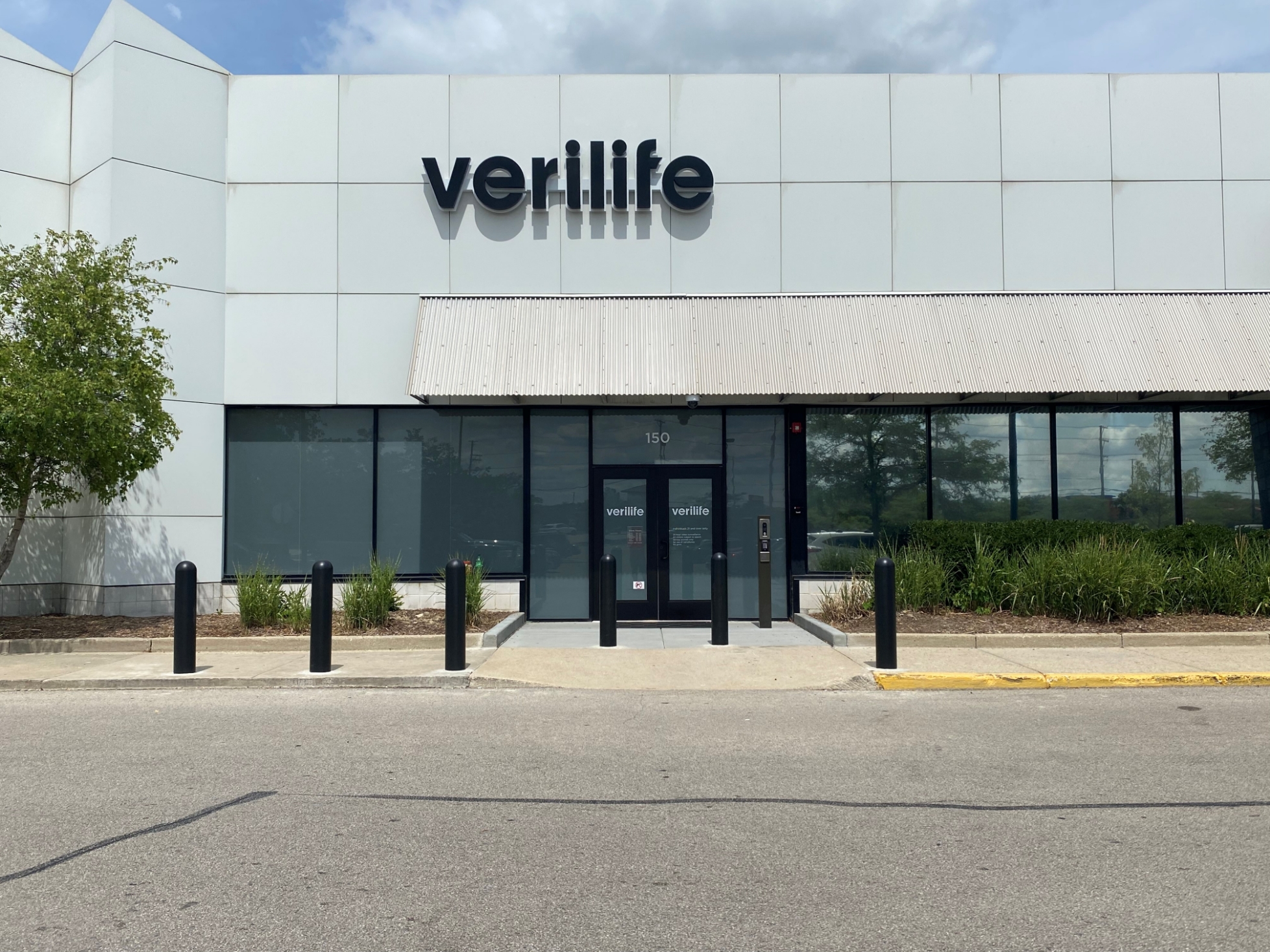
When Verilife needed storefront protection that could be installed with minimal disruption to an existing site, they chose a 20 MPH Core-In system. The bollards are crash-tested to ASTM F3016 for a 5,000 lb. vehicle impact at up to 20 MPH, and installed using TrafficGuard's patented Core-In method—which reduced excavation requirements and kept the project on schedule.
Children's Health Plano: 30 MPH Removable System with Controlled Access
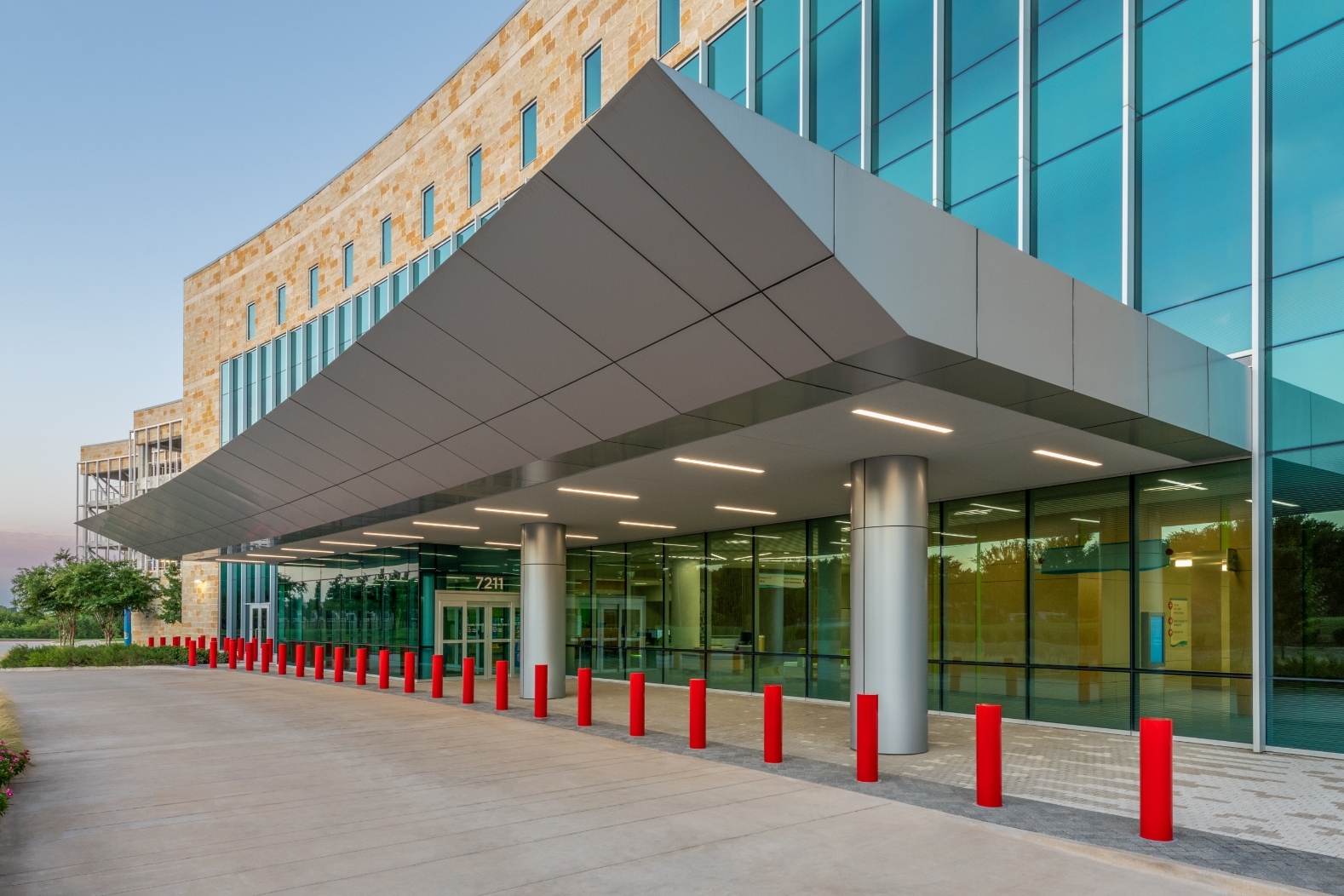
Children's Health in Plano, TX took a different approach for their entrance. They needed the highest level of crash-rated protection while preserving the ability to grant controlled vehicle access when needed. The solution was a 30 MPH Helix Lock removable bollard system, offering ASTM F3016-certified protection at 30 MPH with the operational flexibility of a locking removable design.
Key takeaway: These two projects illustrate the range of what is possible. One prioritized minimally invasive installation on an existing slab. The other prioritized maximum crash protection with access flexibility. Both arrived at a solution that fit their specific site and operational requirements.
Storefront Bollard FAQs
Ready to Protect Your Storefront?
Vehicle impacts at storefronts are preventable. The right bollards placed in the right locations create a physical barrier that stops vehicles before they reach your building, your customers, or your employees. And with options ranging from standard security bollards to ASTM F3016 crash-rated systems, there is a solution that fits every risk level, access requirement, and budget.
TrafficGuard has been manufacturing high-quality bollards in the U.S. for over 25 years. Our products are built from heavy-duty steel, available in fixed, removable, and collapsible configurations, and backed by independent crash-test certification where it matters most.
Our team can help you assess your property's risk level and recommend the right crash rating, bollard type, and installation approach for your specific storefront. Contact us or request a quote today!