

Building Impact Protection, Collapsible Bollards, Practical Uses, Fixed Bollards, Traffic Barrier Technology, Removable Bollards, Locking Bollards
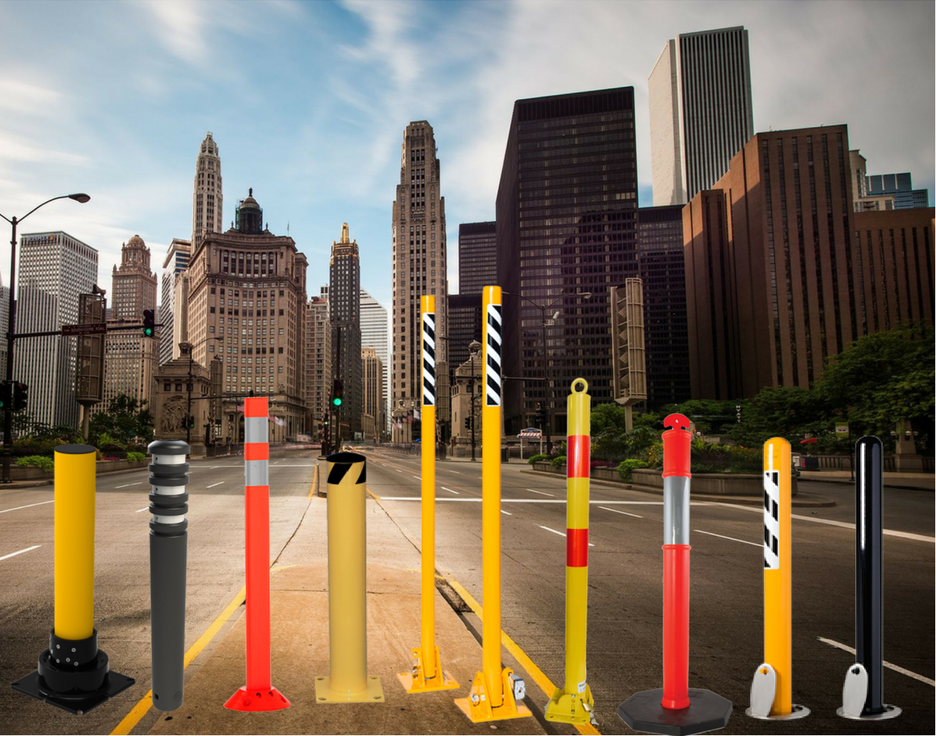
Choosing the right bollard isn't just about blocking a vehicle—it's about matching the mechanism to how often that access point needs to open, and matching the rating to what you actually need to stop. A fixed bollard in a spot that needs weekly delivery access becomes a daily maintenance headache. A decorative removable bollard in front of a building entrance offers little real protection against a vehicle-ramming attack.
This guide compares TrafficGuard's core bollard types side by side, then walks through exactly which one fits which situation—so you can spec the right product the first time.
In this guide:
- Bollard Types at a Glance
- Which Bollard Type Do You Need?
- Fixed Bollards
- Removable Bollards
- Collapsible & Retractable Bollards
- Crash-Rated Bollards
- Material & Feature Options
- FAQs
Bollard Types at a Glance
|
Type |
Permanence |
Access Frequency |
Vehicle Protection |
Best For |
|
Fixed |
Permanent |
Never |
Deterrent, unless crash-rated |
Perimeter lines, permanent property protection |
|
Removable |
Semi-permanent |
Controlled |
Deterrent, unless crash-rated variant |
Loading docks, fire lanes, service access |
|
Collapsible / Retractable |
Semi-permanent |
Recurring (manual or automatic) |
Deterrent |
Maintenance and emergency access lanes or trailheads |
|
Crash-Rated |
Permanent or removable |
Depends on sub-type |
ASTM F3016 / K-rated, stops vehicles at rated speed |
High-security perimeters, anti-ram protection |
|
Stainless Steel *(material)* |
Any of the above |
Any of the above |
Same as base type |
Coastal/corrosive environments, upscale finish |
|
Lighted *(feature)* |
Any of the above |
Any of the above |
Same as base type |
Low-light walkways, ADA-compliant paths |
Stainless steel and lighted options aren't separate mechanisms. They're material and feature upgrades that can be added to fixed, removable, collapsible, or crash-rated bollards.
Which Bollard Type Do You Need?
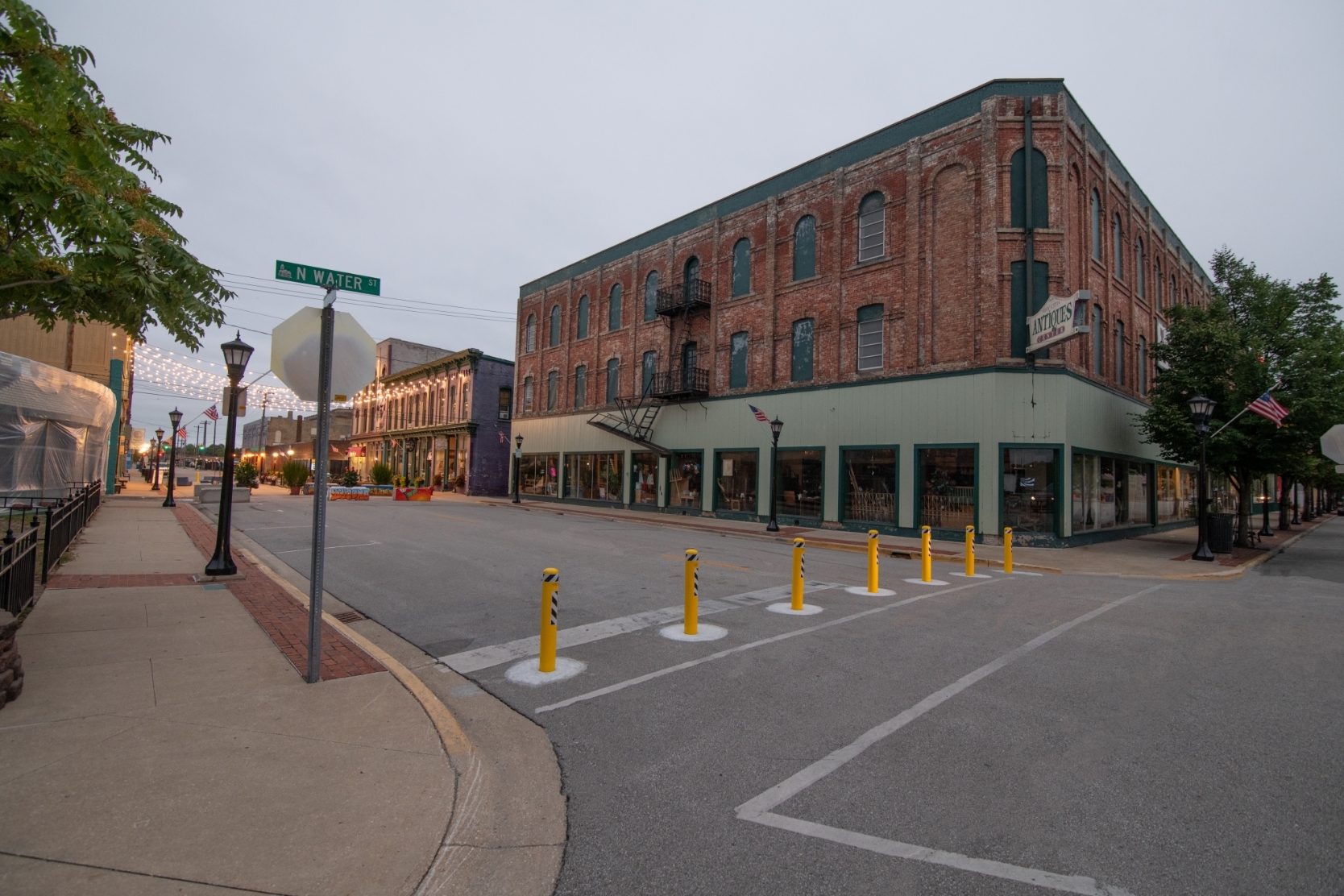
Use this section to match your situation to a product category before diving into the details below.
Permanent, No-Access Control → Fixed Bollards
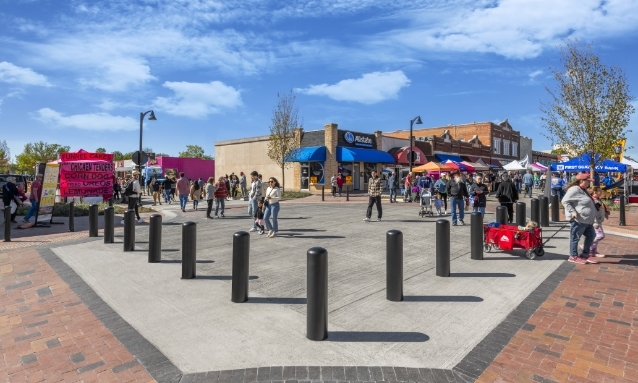
If a vehicle never needs to pass through the area, fixed is the simplest and most durable choice. Good for: property line perimeters, protecting buildings and utility equipment, permanently blocking a driveway or walkway from vehicle traffic.
Controlled, Flexible Access → Collapsible or Removable Bollards
When an area needs to restrict vehicle access while still allowing authorized vehicles through when necessary, collapsible or removable bollards provide flexible access without a permanent barrier.
Choose collapsible/retractable bollards for areas that require recurring vehicle access, such as maintenance and emergency access lanes or trailheads. These bollards fold down flat, allowing authorized vehicles to pass without requiring the bollard to be physically removed.
Frequent, Daily Access Control → Retractable (Automatic) Bollards
For access points opening and closing multiple times a day, manual removable bollards become impractical fast. Good for: parking garage entries, gated communities, controlled loading zones with high vehicle turnover.
Occasional, Manual Access → Removable (Locking) Bollards
Where access is needed a few times a week or month rather than daily, a locking removable bollard gives you security between uses without automation costs. Good for: service entrances, dumpster enclosures, seasonal vendor access.
Vehicle-Ramming Protection → Crash-Rated Bollards
If the requirement is stopping a vehicle at speed—not just deterring casual encroachment—only a crash-rated bollard, engineered and tested to ASTM F3016 will do the job. Good for: government buildings, embassies, stadiums and arenas, high-profile retail entrances, critical infrastructure.
Crash-rated bollards come in both fixed and removable configurations, so the permanence question still applies. You're layering the impact rating on top of the mechanism choice, not replacing it.
Corrosive or Coastal Environments → Stainless Steel
Standard steel bollards can rust in coastal air, road-salt exposure, or high-humidity climates. Stainless steel resists corrosion without the maintenance cycle of repainting. Good for: waterfront properties, parking structures in salt-belt states, facilities where a lower-maintenance, higher-end finish matters.
Low-Light Visibility → Lighted Bollards
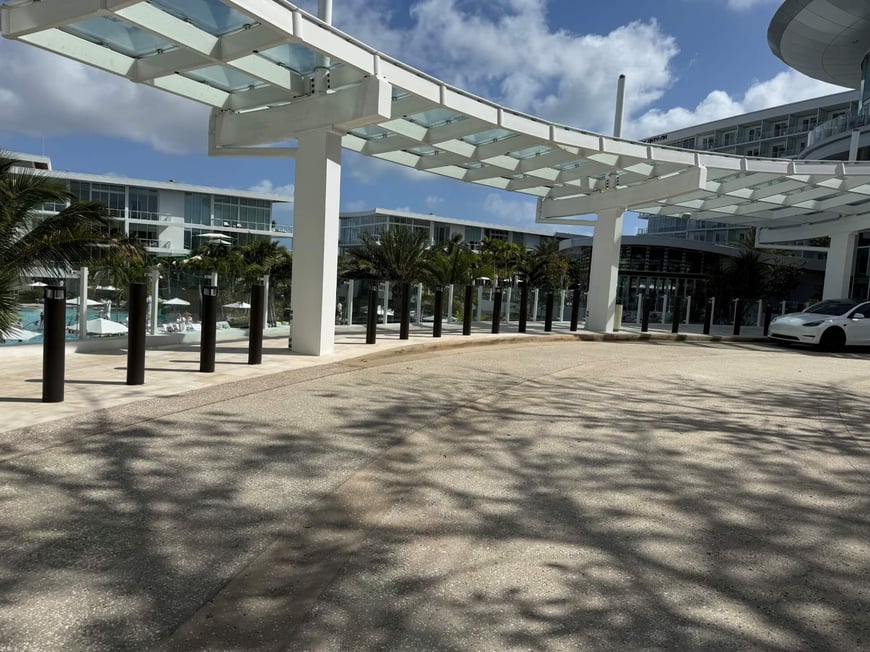
When the job includes guiding foot traffic or marking a path edge after dark, a lighted bollard does double duty. Good for: walkways, parking lot perimeters, ADA-compliant accessible routes, hospitality and retail exteriors where after-hours appearance matters.
Fixed Bollards

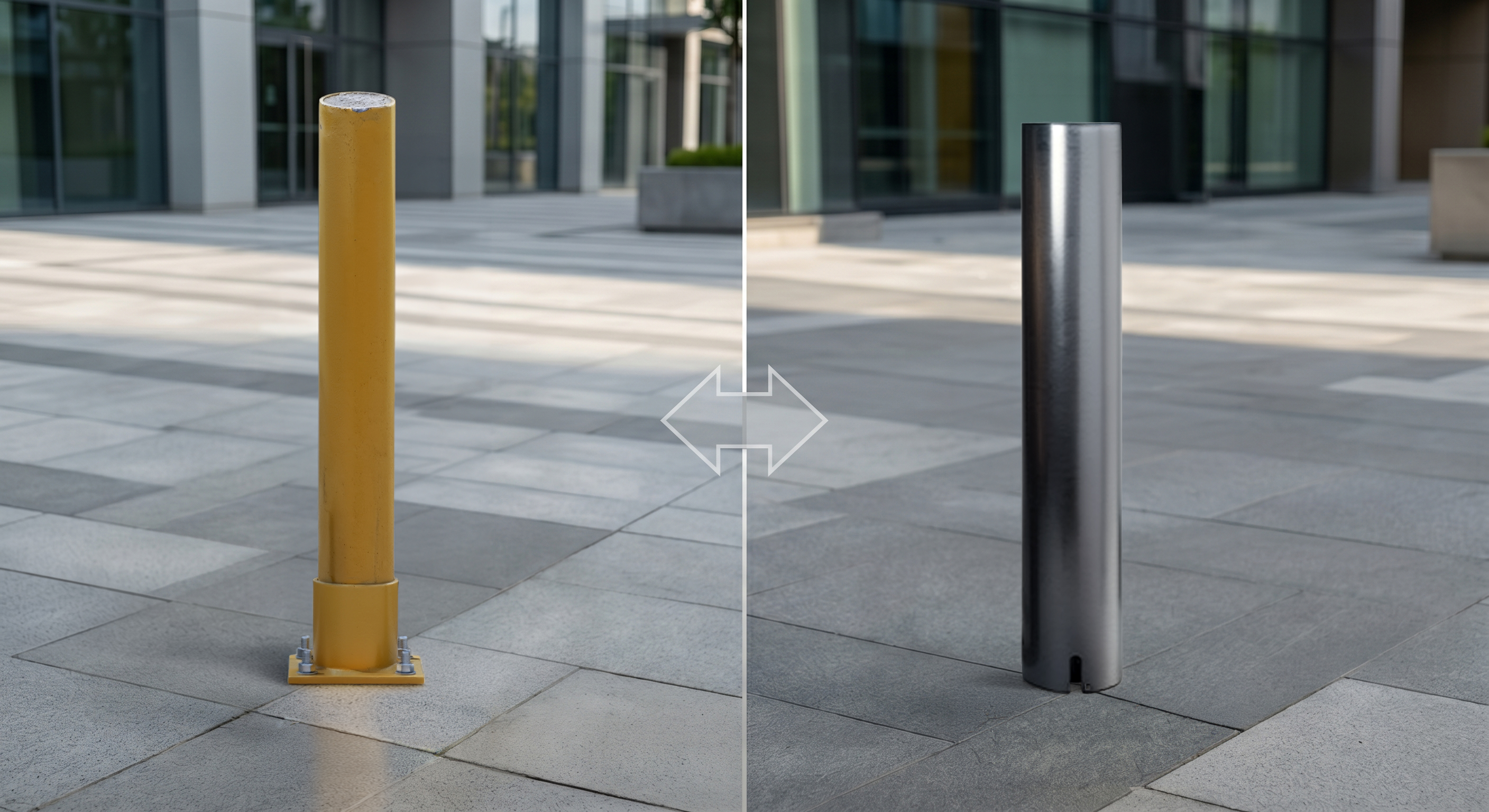
Fixed bollards are permanently embedded—either core-drilled into existing concrete or set in a trench-and-pour foundation for deeper, crash-resistant applications. There's no mechanism to maintain, no moving parts to fail, and no way to accidentally leave an access point open. The tradeoff is exactly that: once it's in, that spot is permanently closed to vehicles. Choose fixed bollards when the location doesn't need vehicle access, ever, and you want the lowest-maintenance option available.
Removable Bollards
![Locking Top Lock Series removable bollard [TL1004R]](https://www.trafficguard.net/hs-fs/hubfs/Product%20Images/012.jpg?width=250&name=012.jpg)
Removable bollards sit in an in-ground sleeve or surface-mounted base and can be lifted out entirely when access is needed. TrafficGuard's removable line splits into locking configurations (top-lock, key-lock, high-security, and other mechanisms that secure the bollard in place until authorized removal) and non-locking configurations (drop-in and twist-in styles for lower-security, higher-frequency use). The right lock type depends on how much security is needed and how quickly authorized staff need to open it.
Collapsible & Retractable Bollards
![Double Post Screw Lock collapsible bollard [DHB-SL]](https://www.trafficguard.net/hs-fs/hubfs/Product%20Images/DHB-SL_featured.jpg?width=700&name=DHB-SL_featured.jpg)
Collapsible bollards fold down to ground level instead of being fully removed, which makes them faster to operate for repeat use. They're available in manual (fold down by hand) and automatic (motorized, often keypad- or remote-controlled) options. Because the bollard stays attached to its base, there's no separate piece to store or lose track of—a practical advantage over removable bollards in high-traffic access points.
Crash-Rated Bollards
Crash-rated bollards are engineered and independently tested to stop a specified vehicle weight at a specified speed—commonly rated to ASTM F3016 or comparable K-rated standards (K4, K8, K12, corresponding to different vehicle/speed combinations). This is a fundamentally different design category from standard bollards: deeper foundations, reinforced steel cores, and engineered footings that transfer impact load into the surrounding structure. If your specification requires a certified stopping capability rather than a visual deterrent, crash-rated is the only category that meets that bar. Be sure to confirm the rating and certification documentation before purchase.
Material & Feature Options
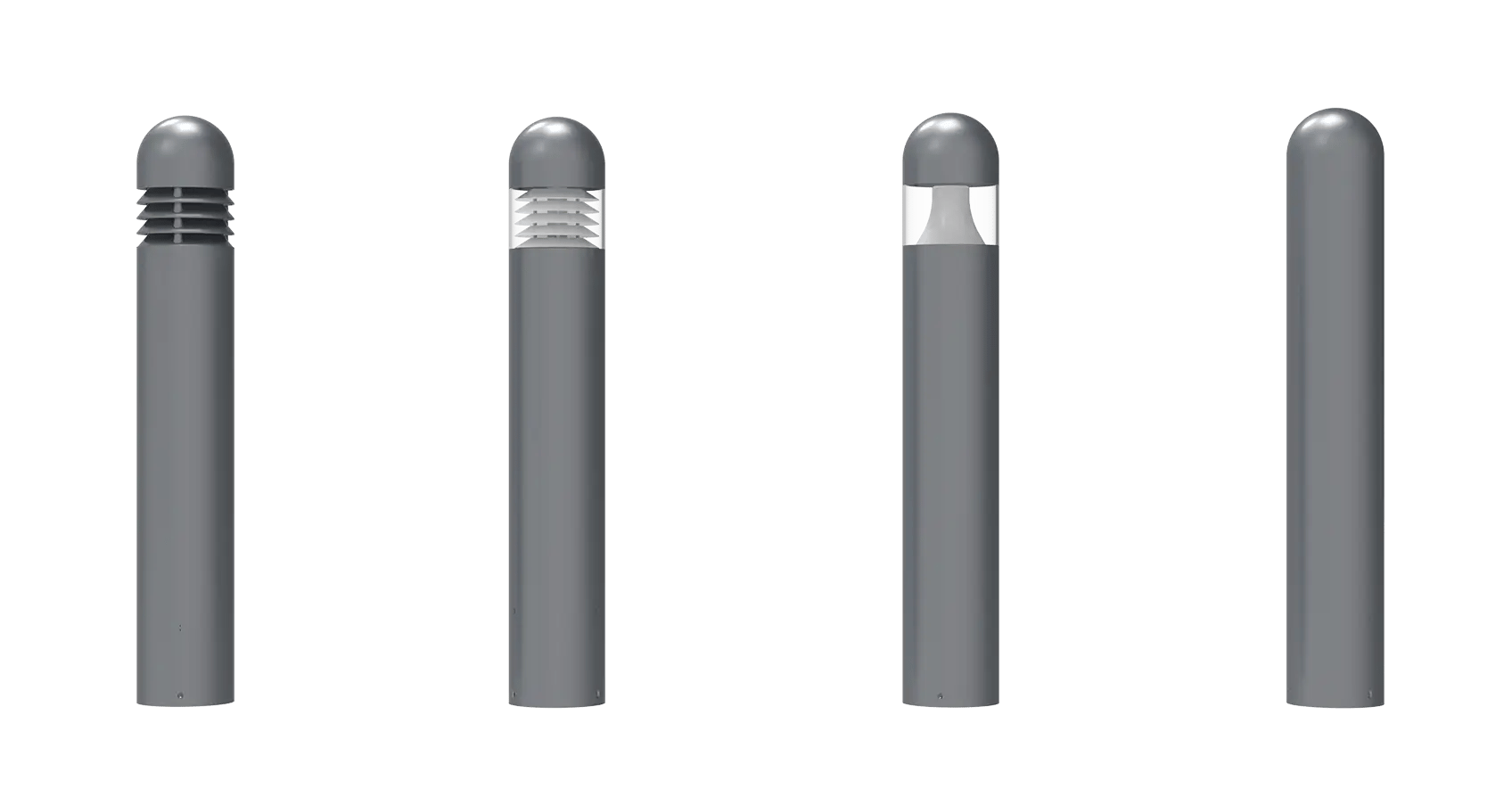
These options layer onto any of the four types above. They're not a separate decision, but a refinement of it.
Stainless Steel
A material upgrade for corrosion resistance and a higher-end finish. Available across fixed, removable, collapsible, and crash-rated configurations.
Powder-Coated Steel
A finish option offering color customization and added surface protection over standard steel, at a lower cost than stainless. Available across the same range of configurations.
Lighted / Illuminated
An add-on feature for visibility and wayfinding in low-light areas. Provides the same physical protection as its base configuration, plus illumination. The light itself is a visibility feature, not a security feature.
FAQs About Choosing the Right Bollard
Not Sure Which Bollard Is Right for You? We Can Help
For help selecting the right bollard type for your property, or to learn more about the bollards we offer, please contact us today! Our team is happy to answer any questions you may have.